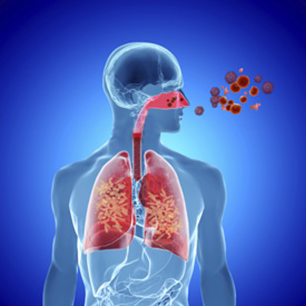


If you’re an allergy patient or a doctor treating patients with allergies, you may think that being allergic to water sounds impossible. After all, how can someone be allergic to the very substance that comprises over two-thirds of their body? However, it is possible for even this seemingly harmless component of our lives to trigger a serious reaction. In this blog post, we’ll explore what it’s like for individuals who suffer from an allergy to water called Aquagenic Urticaria and some strategies for managing the condition. Read on for more information about living with an aquatic allergy.
1) Water in all forms causes irritation
Water in all forms irritates the skin. This, of course, includes tap water, river water, sea water, swimming pool water, rain, and humidity. Unfortunately, sweat, tears, and saliva also cause reactions, and are more difficult to avoid.
2) Lifestyle changing
Having a water allergy is lifestyle changing. Obviously. Everyday tasks like showering, cleaning, exercise, or even just drinking water have to be modified. People with this condition may have to limit showering to a measly 5 minutes twice a week, cut their hair to avoid sweating, change diets, or even move to a less humid or water-prone area.
3) Rash occurs within 15 minutes of contact.
When the water has been removed, the rash generally fades within 60 minutes. Occasionally hives appear, but even when they don’t, the reaction can be painful and itchy, and may even start to blister.
Water-induced urticaria, commonly referred to as a rash due to water exposure, is an allergic reaction caused by contact with or ingestion of water. Symptoms include redness, itching, burning sensations and swelling on the skin that can range in severity from mild irritation to severe discomfort. This urticarial rash is often triggered by cold temperatures and low humidity, making swimmers particularly vulnerable. Often misdiagnosed as other forms of contact dermatitis, urticaria water rash requires specific treatment to address the underlying causes in order to provide relief. Properly treating urticarial rashes involves identifying any possible allergens associated with the reaction and avoiding them whenever possible.
Now wait a minute! Is this even a reported condition? Well, I’m glad you asked–Rothbaum R, McGee JS. Aquagenic urticaria: diagnostic and management challenges. J Asthma Allergy. 2016 Nov 29;9:209-213. doi: 10.2147/JAA.S91505. PMID: 27942227; PMCID: PMC5136360.
Aquagenic urticaria (AU) is a rare inducible form of physical urticaria, which occurs in response to cutaneous exposure to water, including sweat and tears. Patients present with characteristic 1-3 mm folliculocentric wheals with surrounding 1-3 cm erythematous flares within 20-30 minutes following skin contact with water. In rare cases, there are concomitant systemic symptoms, such as wheezing or shortness of breath. The pathogenesis of AU is poorly understood at this time, and it appears to be mediated in both a histamine-dependent and independent manner. Diagnosis is based on eliciting a thorough clinical history combined with a water challenge test. Some patients may need to undergo further testing to exclude other physical urticarias. Rarely, multiple physical urticarias can be present in one patient, which can complicate diagnosis and treatment. Currently, the first-line therapy for AU is an oral administration of nonsedating, second-generation H1 antihistamines, but many patients may require further interventions to have adequate symptomatic control. In this review, we discuss the diagnostic and management challenges of AU. We review the key diagnostic features that differentiate AU from other physical urticarias. We additionally describe a therapeutic ladder for the treatment of AU and the rationale supporting these treatments.
4) No specific treatment
Because water allergy is so rare, there is currently no condition-specific treatment. That means there is no cure. There are, however, several general remedies that may help mitigate reactions. H1 antihistamines are most commonly used, but light treatments, steroids, and sodium bicarbonate baths have also been reported to be successful. If an extreme reaction occurs, an epi-pen may be required as well. No matter how you treat a water allergy, ongoing research would suggest that antihistamines (particularly second generation antihistamines) are worth a try. I wonder if Xolair would also be useful for treating the hives that come from water allergy.
Rujitharanawong C, Kulthanan K, Tuchinda P, Chularojanamontri L, Metz M, Maurer M. A Systematic Review of Aquagenic Urticaria-Subgroups and Treatment Options. J Allergy Clin Immunol Pract. 2022 Aug;10(8):2154-2162. doi: 10.1016/j.jaip.2022.04.033. Epub 2022 May 6. PMID: 35533998.
Background: Aquagenic urticaria (AquaU) is a rare variant of chronic inducible urticaria where wheals occur after skin contact with water. Information on clinical manifestations and treatment outcomes is limited, which makes the management of AquaU challenging.
Objective: To systematically review disease features and relevant triggers of AquaU and patients’ response to treatment.
Methods: Related articles were searched by use of the terms “aquagenic urticaria” and “aquagenic angioedema” until June 2021 and reviewed according to Preferred Reporting Items for Systematic Reviews and Meta-Analysis recommendations.
Results: A total of 77 patients with AquaU were investigated in 59 studies including 47 case reports and 12 case series. AquaU predominantly presented in women (47 patients, 61%), and the mean age of onset of the disease was 19.6 ± 10.8 years (range: 0-54 years). Wheals commonly occurred in localized areas and regardless of the water temperature. Based on the reviewed evidence, AquaU can be classified as familial AquaU (FAquaU, 18.2%) and acquired AquaU (AAquaU, 81.8%). Although many treatments were used in both subtypes of AquaU, the use of second-generation H1 antihistamines (2ndAH1) was reported most often to achieve marked improvement in both subtypes. The use of topical therapies in AquaU, which most commonly use hydrophobic vehicles, is poorly documented and of controversial efficiency.
Conclusions: AquaU is proposed to be classified into 2 subtypes, FAquaU and the more common AAquaU. Treatment with a 2ndAH1 is recommended as the first-line treatment for both types of AquaU. Further studies are required to fill knowledge gaps.
5) Diagnosis process
The process of diagnosing water allergy includes a “water challenge test,” where the patient has cold water applied to his or her body for 30 minutes. Generally the water is applied to the upper body because other areas of the body are often inconsistent. If the test declares a negative, a full body shower or bath test may be needed. However, full body tests should never be done on patients who have displayed serious symptoms.
Sounds bizarre? An 18-year-old male visited our department complaining of recurrent episodes of an itchy rash after hand washing, showering/bathing, drinking water, and getting rain-soaked. He was diagnosed with aquagenic urticaria after a water provocation test and histopathologic examination. Five months of antihistamine treatment successfully prevented further wheal formation. Aquagenic urticaria is a very unusual form of physical urticaria caused by contact with water. It manifests as pruritic small wheals surrounded by erythema within 30 minutes of exposure. The condition can be diagnosed by a water provocation test. Systemic antihistamines are the first-line treatment, with anticholinergics, phototherapy, or barrier cream used alternatively or additionally. Four cases of aquagenic urticaria have been reported in Korea, but no histopathologic evaluation was reported in the English or Korean literature. Herein, we provide both a case report of aquagenic urticaria diagnosed by the water provocation test and histopathologic examination results for this patient.
The above story was published in a medical journal with the following reference–>Seol JE, Kim DH, Park SH, Kang JN, Sung HS, Kim H. Aquagenic Urticaria Diagnosed by the Water Provocation Test and the Results of Histopathologic Examination. Ann Dermatol. 2017 Jun;29(3):341-345. doi: 10.5021/ad.2017.29.3.341. Epub 2017 May 11. PMID: 28566914; PMCID: PMC5438944.
6) More common in women
Water allergy is more commonly diagnosed in women than it is in men. It generally starts to manifest itself during puberty.
7) No known cause
There is no known cause of water allergy. There are, however, several theories. Some scientists think that the allergy is not to the water itself, but to a dissolved substance within the water. Others believe that something on the patient’s skin reacts upon exposure to water. Whatever the exact cause, it is generally accepted that this is not simply an allergy to pure water.
8) Often misdiagnosed
Water allergy is often misdiagnosed. (imagine that!) Due to the rarity of the condition, doctors often diagnose it as an allergy to substances commonly found in water like chlorine, salt, or other pollutants.
9) Can result in anaphylactic shock.
Anaphylaxis to water is an extremely rare allergy, in which an individual can have an allergic reaction after their skin comes into contact with even the purest forms of water. The anaphylaxis can lead to an itchy or burning rash that may appear shortly after the contact and develops over time. In severe cases, anaphylactic shock may also manifest along with difficulty breathing or physical discomfort. It is important for individuals who are at risk of anaphylactic shock due to an anaphylaxis to water rash be tested and monitored regularly, and carry an epinephrine auto-injector to help manage reactions they may experience when coming into contact with water. Although symptoms are relatively mild for most patients, severe reactions can occur. Severe cases can lead to anaphylactic shock, which can be fatal. Someone experiencing anaphylactic shock should have this epi-pen applied as soon as possible, and bystanders should call 911.
10) Lifelong
Unfortunately, water allergy is a lifelong struggle. However, studies have shown that as patients age, the severity of symptoms decrease. Thank goodness for getting old!
To sum up, aquatic allergy or water allergy can affect anyone at any age and it can come in various forms. It is important to be informed of the different types of aquatic allergy since it can lead to debilitating hives as well as a potentially life-threatening case of anaphylaxis. This emphasizes the importance of consulting with a medical professional should symptoms occur and special attention should be paid to the possibility of an aquatic allergy. Aquatic allergies SHOULD not be taken lightly and precautionary measures should always be taken. Always think of aquatic allergies when evaluating anaphylaxis cases; it could save someone’s life! With this knowledge and information on hand, you can feel empowered and confident that you have the tools needed to identify a potential aquatic allergy issue. Remember: Stay alert and stay safe!
 TulsaAllergyNews