

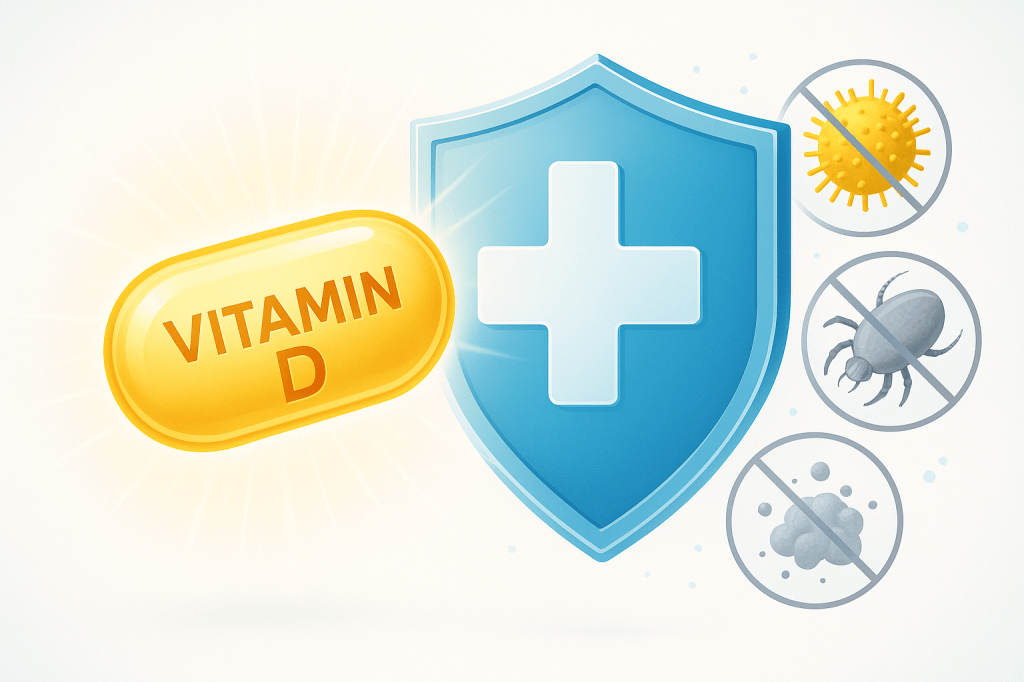
Walk into any allergy clinic, and odds are this shows up on the chart: Vitamin D deficiency.
It’s not always followed up, rarely tracked, and almost never prioritized, but that doesn’t mean it’s not affecting your immune system and allergies.
Vitamin D is more than a vitamin. It’s a hormone. Your body makes it naturally when exposed to sunlight. But modern life has boxed us indoors.
Most people are not getting enough.
And if you’re dealing with allergies, that deficiency could worsen things.
Vitamin D won’t cure your allergies. But if you ignore it, you may be stacking the odds against your immune system and inviting more frequent or severe allergic reactions.
What Vitamin D Actually Does Inside Your Immune System
Vitamin D supports your bones and modulates your immune system.
People with normal levels tend to have fewer upper respiratory infections. Less inflammation. Better immune regulation.
Although Vitamin D is still being studied, researchers believe it influences how your immune system distinguishes between friend and foe. This is critical in allergy, where your immune system reacts to harmless things like pollen or peanuts as if they’re threats.
Studies suggest that sufficient vitamin D may reduce respiratory infections by 10–15%. It does so by helping regulate T-cell activity, which reduces allergy-promoting Th2 and Th17 inflammation. This supports regulatory T-cells, your immune system’s “brakes.” These are critical in preventing overreactions to harmless substances like pollen or pet dander.
While it is not a standalone allergy treatment, it could mean avoiding multiple sick days or allergy flare-ups each year.
How to Know If You’re Deficient
Vitamin D doesn’t always scream when it’s low.
You might feel fine until allergy season hits harder than usual, or you get your third sinus infection in two months.
To find out where you stand:
- Ask your doctor for a blood test (specifically a 25-hydroxyvitamin D test).
- Ideal levels should fall between 30–50 ng/mL.
- If you’re under 20? You’re likely deficient. Under 10? You’re at risk.
Test, don’t guess. Taking too much without testing can cause toxicity, especially if you’re supplementing by mouth.
Who’s Most at Risk of Vitamin D Deficiency?
You are, if:
- You work indoors and rarely get sun exposure.
- You live north of Atlanta (less sun in winter).
- You have darker skin. More melanin = slower vitamin D synthesis.
- You’re obese. Vitamin D is fat-soluble and can get trapped in fat tissue.
- You have gut absorption issues (like Crohn’s or celiac disease).
Deficiency is even more problematic if you already have asthma or allergic conditions. Studies show people with low vitamin D may experience worse lung function, more severe asthma attacks, and less response to medication, especially corticosteroids.
Even kids aren’t immune. Most school-aged children would benefit from more outdoor play and a solid multivitamin.
If any of this applies to you or your child, address it now.
Start Here: How to Get Your Levels Up
Getting your vitamin D from food is tough. You’d need to drink about 10 cups of fortified milk a day to meet your daily needs.
I don’t think you want to do that.
Instead, to naturally boost vitamin D, go outside for 30–60 minutes per day with your arms and legs exposed. Don’t wear sunscreen the whole time (but don’t burn either).
And to supplement safely, start with 1,000–2,000 IU/day for adults. For kids, use weight-based dosing or get a pediatrician’s recommendation.
No matter what, always follow up with a blood test in 2–3 months.
Why the Form You Take Matters
Sunlight is self-regulating.
Your skin stops producing vitamin D once it hits the sweet spot. You literally can’t overdose on the sun. We’ve seen this confirmed by fishermen on the equator who are out in the sun all day, every day, with perfect levels.
Supplements are a different story.
When you swallow pills or drops, your body doesn’t have a shut-off switch. That’s why testing is critical. Some people need more, especially if they’re deficient. Others hit toxic levels with standard dosing.
The only way to know is to get a blood test.
If you’re not absorbing well (gut issues, gastric bypass, etc.), you may need high-dose injections or supervised regimens. This is where your doctor comes in to help.
The Gut Connection: What Most People Miss
Vitamin D also supports gut health, which plays a major role in allergic sensitivity.
It strengthens the intestinal wall, promotes good bacteria, and calms down gut-driven immune flare-ups. If your gut barrier breaks down, allergens and microbes can slip into the bloodstream, triggering reactions where they don’t belong. Low vitamin D is linked to this breakdown, especially in kids.
Supporting your gut means fewer immune overreactions, and vitamin D is a key part of that.
If you want a stronger gut and immune system, then eat fiber-rich foods, get 30+ minutes of outdoor time daily, and ensure your vitamin D is in the optimal range.
Parents, Pay Attention: Start Early
If you’re trying to reduce your child’s allergy risk, start with two things: sunshine and a multivitamin with D.
Here’s a simple routine:
- Let your kids play outside for at least one hour per day.
- Use multivitamins that contain 400–600 IU of vitamin D.
- Ask your pediatrician to check levels if your child is indoors most of the day or prone to illness.
Studies link low vitamin D levels in pregnancy and early childhood with a higher risk of eczema, food allergies, and asthma. Early-life sufficiency may help a child’s immune system learn not to overreact.
Unfortunately, many schools have reduced recess time (which makes no sense). You’ll have to make up for it at home.
Outdoor play is one of the most underrated health interventions, and it’s free.
The Bottom Line (and What to Do Next)
Most people are walking around with subpar vitamin D levels, and it’s quietly making their allergies, immune issues, and infections worse.
Here’s what to do next:
- Get a blood test. If you’re under 30 ng/mL, fix it.
- Get outside daily. Sunshine is medicine, so use it.
- Supplement safely. 1,000–2,000 IU/day is a good starting point for most adults.
- Retest in 2–3 months to see if it’s working.
Vitamin D might not be flashy, but it’s one of the most impactful, affordable changes you can make for your long-term immune health, especially if you or your kids deal with allergies.
And remember: no pill replaces going outside and moving your body.
 TulsaAllergyNews