
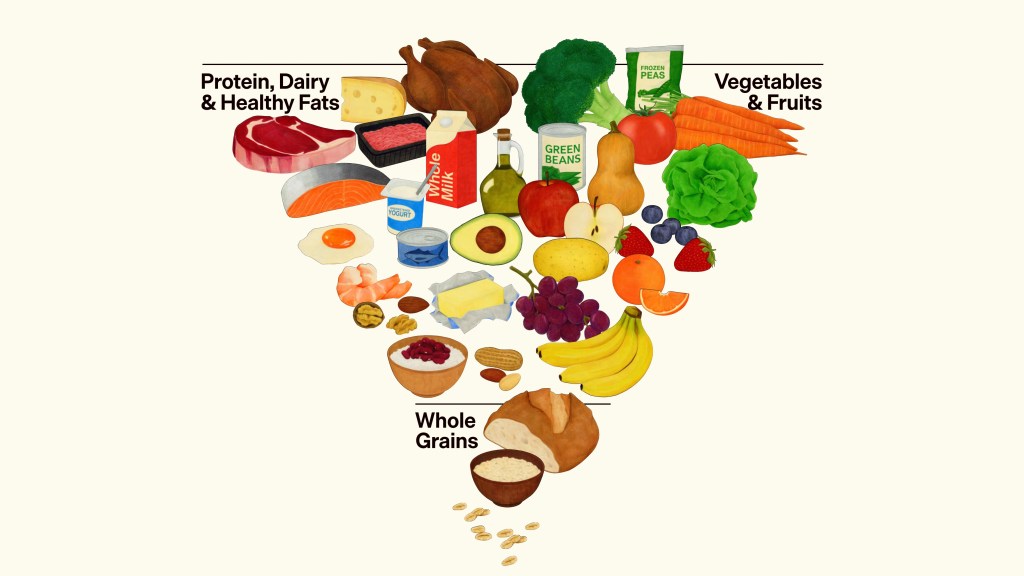
RFK Jr.’s new food pyramid has caused quite a stir, with one side calling it a win for team MAHA and the other dismissing it as a scam.
If allergies are part of your world, that debate doesn’t help you much.
Food allergies don’t come from “bad food.” They start when your immune system identifies a specific protein as a threat and continues to react to it long after the initial exposure.
So the real issue isn’t whether the pyramid is trendy or controversial. It’s what happens when diets shift toward higher protein and simpler foods, especially for kids, schools, and families already managing food allergies.
What does that change in the real world?
The pyramid’s emphasis on protein matters because allergies are often protein-based.
When the pyramid elevates protein to a central role, it reshapes what shows up on plates, especially in schools and institutions.
That matters for allergies because food allergies are reactions to proteins. Your immune system produces IgE antibodies to proteins, not to the sugar in food and not to the fat. Peanut reactions come from peanut proteins.
That matters because the top protein foods are also the top allergy foods:
- Eggs
- Milk
- Peanuts
- Tree nuts
- Fish
- Shellfish
As protein becomes more prominent in meals, exposure increases for foods that already carry the highest allergy risk. That doesn’t create new allergies, but it raises the importance of careful handling for people who already have them.
There is one uncommon exception, alpha-gal, which behaves differently. For nearly all food allergies, protein remains the issue.
But how will those handling food respond?
Schools don’t need a new allergy plan; they need tighter execution and probably more funding.
Shifting protein into a dominant role on student plates raises the cost of school lunches.
Districts with strong funding can absorb that change more easily. Schools already operating on thin margins face a different reality, where meeting new guidelines often means finding the cheapest way to add protein.
That pressure shows up in the kitchen.
When budgets are tight or oversight is loose, protein goals get met by modifying existing foods instead of redesigning meals from the ground up. A recipe that was safe earlier in the year changes quietly, and the change itself becomes the risk.
The most common shortcuts tend to follow cost and convenience:
- Adding egg to baked items to increase protein content
- Using peanut flour or nut powders to boost snacks
- Replacing simple foods with protein bars that combine multiple allergens
- Cross-contact from shared prep tools that weren’t an issue before
Even schools with adequate funding run into trouble when menu changes are not tracked carefully. Higher-protein meals can work in a school setting, but only when recipes stay stable, ingredients are clearly labeled, and kitchen teams are trained to treat every change as significant.
What matters most is that schools are consistent in their foods and that communication to parents is above board.
Fewer ultra-processed foods help you spot allergens, not magically erase them.
The new pyramid cuts ultra-processed foods, removing mystery.
A plain hard-boiled egg is obvious. A granola bar with “natural flavors,” protein crisps, and nut fragments from three countries is not obvious.
Ultra-processed foods often hide allergens inside blends and fillers. That’s where you see the tragedies. A kid grabs a “healthy” bar at practice, takes two bites, and you’re suddenly dealing with hives, vomiting, throat tightness, and panic in a gym hallway.
When you eat simpler, single-ingredient foods, you usually know what you’re eating.
You can also isolate a problem faster. If you break out after shrimp, you know it. If you react after a frozen meal with twelve ingredients, you can only guess.
So yes, the pyramid’s push away from ultra-processed foods can make allergy management cleaner, but it does not make allergies disappear.
Early protein exposure is where you actually get prevention power.
If you’re not certain if schools will be disciplined and communicative, then early introduction of allergenic foods, done safely, will help train tolerance.
One of the landmark real-world examples came from Israeli infants eating peanut-containing snacks early in life, often Bamba puffs. The comparison groups that delayed exposure had higher peanut allergy rates, while those who had early exposure had 71% to 86% relative reduction in peanut allergy risk.
That’s why pediatric advice shifted. In many cases, you don’t wait years to introduce peanut or egg. You introduce earlier, with guidance, especially if a child has eczema or other risk factors.
So if the new pyramid nudges families toward more protein earlier, it could support the tolerance trend.
You should separate nutrition policy from vaccine claims, fast.
As the new pyramid circulates, you are also going to hear arguments linking vaccines, aluminum adjuvants, and food allergies.
One popular version from RFK Jr is the idea that vaccines contain aluminum to stimulate the immune system, food allergies involve immune stimulation, therefore the two must be connected.
That conclusion skips several important steps.
Aluminum adjuvants are designed to help the immune system recognize a vaccine target. Food allergies develop through a separate process, one that depends on how and when food proteins are introduced to the immune system, especially early in life.
So what actually lowers food allergy risk is not avoidance. It is early and appropriate exposure to allergenic proteins when the immune system is learning what is safe. That is why pediatric guidance shifted years ago, after strong evidence showed that introducing foods like peanut and egg early reduced later allergy rates.
The new pyramid is a good direction, but it will test real-world systems.
The new pyramid points in a direction many families already want to move, toward simpler foods and more meaningful nutrition.
The challenge is that people make food choices based on cost, habit, access, and time, not guidelines alone. Protein costs more than carbohydrates, and that reality does not disappear with a policy shift.
You can see versions of this approach working elsewhere, however. Countries with high-protein diets still have allergies, but they often rely on simpler meals built around fish, dairy, and single ingredients. Iceland is one example, with high protein intake and a lower allergy burden shaped by environment, food simplicity, and consistency.
That perspective matters, especially in a heated political environment.
The pyramid does not solve allergies on its own, but it creates room for better structure. When meals stay simple, ingredients stay visible, and communication stays clear, higher-protein patterns can support health without increasing risk.
 TulsaAllergyNews