

For those hoping for an answer to their food allergies, experts have recently shared a glimmer of hope. Food allergy research has gained momentum and is advancing at astonishing rates compared to the advancement in studies on hayfever. Recent years have seen increased collaboration between universities and other medical organizations working together towards unraveling the complexities of food allergies while also looking into therapies and treatments that could prove successful in patients who suffer from them. From using animal models to modeling studies in vitro, researchers are pushing forward with a multitude of unique approaches focused on finding solutions for those plagued by these life-threatening conditions. In this blog post, we highlight some recent advances made in food allergy research and discuss how far this field has evolved since its inception not just from curing the allergies themselves but in raising awareness about allergens as well.
The emergence of food allergy as a popular and trending topic has been surprising to many, but scientific findings and studies have backed up the surge in food allergy related issues. A recent report found that food allergy is the biggest cause of food-related allergic reactions, with more publications specifically addressing food allergies than even hay fever. As a result, food allergy awareness is quickly gaining traction due to increasing recognition of the issue’s prevalence and severity, along with increased numbers of medical professionals performing research into better diagnosis and treatment options. There’s still lots of work left to be done to increase awareness for food allergies all around the world, but it’s clear that food allergies are becoming a major focus in health and dietary circles worldwide.
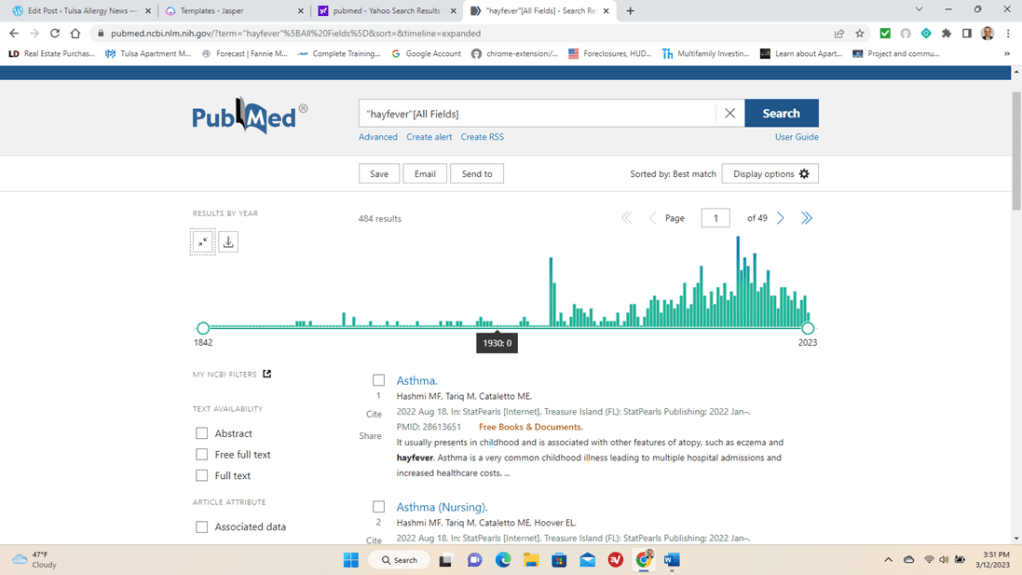
I always find it interesting and informative to look at the number of studies published on any topic in medicine to get an idea of what’s popular. Yes, you heard me, medical studies fluctuate in their popularity and frequency of publication regarding diagnosis or treatment of food allergies in this case. Look at this comparison of graphs that depict the number of studies on food allergy vs the number of studies on hay fever. Studies published on food allergy: 12,542; studies published on hay fever: 484. Clearly the winner in popularity and medical press is food allergy. Also, make note of the rapid rise in studies on food allergy over the past 5 years–it’s an exponential increase. Compare that to hay fever which is actually losing momentum over the same period of time.

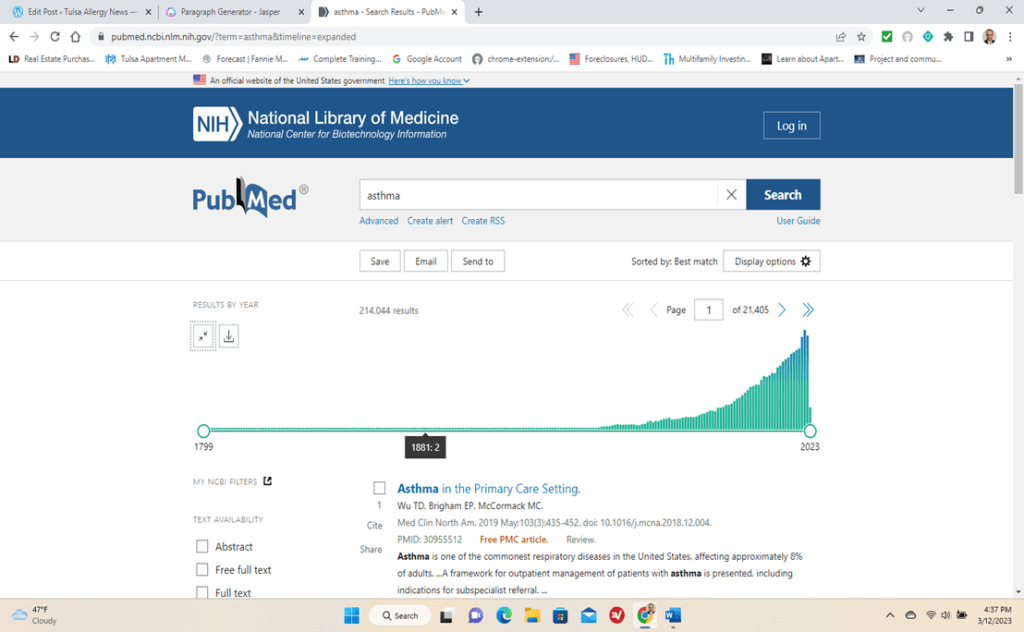
So what’s the growth in asthma studies? As you can see below, asthma studies number >200K and also have an exponential growth in recent years just like food allergy. I guess we’re not done learning about asthma either.
Here’s a list of new developments in the field of food allergy, that I’ll look at in more detail in future discussions if it’s that popular:
- What is OIT?
- Can you use biologicals to treat and protect you from food allergies?
- Is the incidence of food allergies really going up that much?
- If so few articles are published on hay fever, is there any new and relevant articles on this subject?
- What should I be prepared to do if my child has food allergy and has a severe reaction?
In conclusion, food allergy is becoming increasingly common worldwide, and with its growing visibility, more and more research is being conducted to find possible cures or treatments. With the body of knowledge on the subject continuing to expand, other equally important topics such as cross-reactivity, predictors of severe reactions, the psychosocial impact of food allergies will continue to emerge in the future. So readers should stay tuned for more news and updates in regards to food allergy, though not forgetting the importance of paying attention to signs and symptoms right now. A recent survey by pediatric allergists found that three-quarters of respondents could not correctly identify a food allergy versus an adverse reaction or intolerance. If you face any such issues related to your health and are suspecting one might be a case of food allergy, it’s time to schedule a visit immediately with a qualified healthcare provider who can provide proper diagnosis and treatment if needed. So keep your eyes open for any health conditions associated with food allergy and don’t forget – if you think it’s a food allergy, it’s time to check it out!
 TulsaAllergyNews