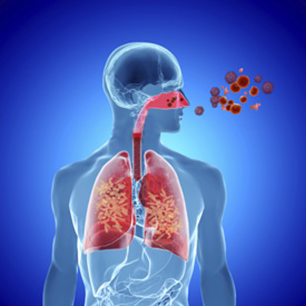

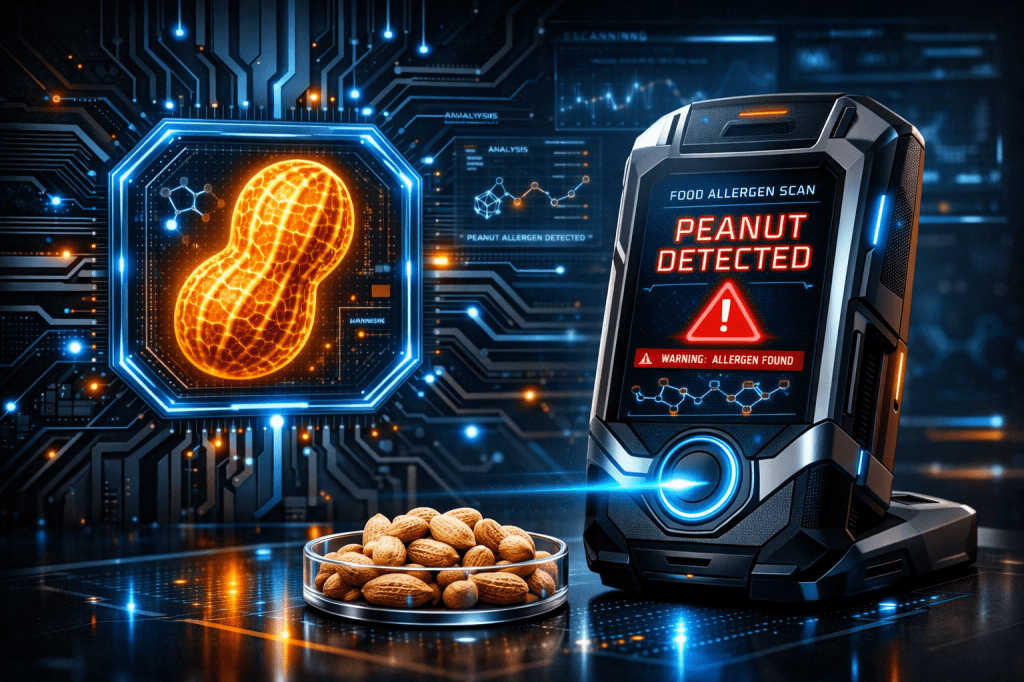
Two breakthroughs in food allergy tech are getting a lot of attention right now.
- A peanut patch that exposes the body through the skin instead of food.
- Portable scanners that claim to detect hidden allergens in your meal within minutes.
At first glance, both look like major steps forward. But that confidence can get ahead of the evidence.
Before you trust either of these tools, it’s worth understanding what they actually change, where they fall short, and how to use them without quietly increasing your risk. After all, trends in medicine can be dangerous, especially when adoption moves faster than the data.
As an expert in allergy for several decades, here’s what you need to know.
Restaurants are still where most serious reactions happen
When patients ask me where reactions occur, I don’t hesitate.
Restaurants.
About half of fatal food allergy reactions trace back to a meal prepared outside the home. That includes chain restaurants, airport counters, and busy fast-casual kitchens where speed matters more than precision.
Picture a Friday night dinner rush. A line cook grabs the same spatula used on a peanut sauce and flips a piece of chicken. A server reassures a table without checking the ingredient list, all while the manager assumes the recipe hasn’t changed.
While no one intends harm, that chain of small decisions is where reactions begin.
And with the new technology entering this environment, it unfortunately will not be changing how restaurants function systemically.
The peanut patch reduces reactions, but not to a safe level
The peanut patch works by delivering tiny amounts of peanut protein through the skin over time.
Think of a nicotine patch, but for peanuts.
In large studies, including trials with more than 600 children, about 46% showed reduced reactions after a year of use.
That sounds promising until you compare it to oral immunotherapy (OIT).
With OIT, where patients eat controlled doses of peanut daily, desensitization rates often reach 80 to 95 percent. And despite what people assume, most families stick with it. The fear of accidental exposure keeps them consistent.
So if ten children sit in a clinic room, the patch may help four or five. Oral therapy helps eight or nine.
In seasonal allergies, partial improvement from a patch can be enough. But with food allergies, the risk is always anaphylaxis, so anything short of near-complete protection leaves too much on the table.
The immune system responds differently depending on the route
The other reason why I champion OIT instead of skin patches is that the body does not treat every exposure the same.
When peanut protein enters through the digestive tract, it interacts with immune cells that are built to develop tolerance. Over time, the body learns to handle that exposure without overreacting.
Through the skin, the process looks different.
Skin immune cells act more like guards than teachers, which is one reason the patch tends to be easier to tolerate.
In large clinical trials, serious reactions tied to the patch were uncommon. About 1 to 2 out of every 100 children had a significant allergic reaction during treatment. Most of the side effects were mild, like redness, itching, or irritation where the patch sat on the arm or back.
That safety profile is what makes the patch appealing to families. But the tradeoff is weaker protection.
A 40-50% response rate does not change the daily rules of food allergy. A child on the patch still needs the same label checks, restaurant questions, and epinephrine within reach.
However, OIT, sometimes paired with Xolair, pushes OIT’s 90% protection further by raising the amount of peanut the body can handle before reacting.
Clearly a safer bet.
Food scanners measure one bite, not the whole plate
The other emerging tech to combat allergies are devices like Allergen Alert, Allergy Amulet, and Nima Sensor, which are designed to test a small sample of food.
You place a piece of your meal into a capsule. The device analyzes it and gives a result.
Restaurant reactions solved, right?
Unfortunately, in a lab, where the amount of allergen is known and evenly mixed, that process works well. But in restaurant kitchens, it becomes unpredictable.
You just might get:
- A burger with cross-contact on one side of the bun.
- A bowl of soup with traces in one ladle and not the next.
- A sauce mixed unevenly across a dish.
The device reports on what you tested, but it cannot guarantee what you did not. And something we must never forget is that every test carries a margin of error.
That’s where false negatives become dangerous.
If the portion you tested was clean but the next bite isn’t, the device has already done its job. You keep eating with confidence, and that confidence becomes the risk.
With food allergy, the amount you eat matters. One bite may pass, and the next can escalate fast to an emergency room.
More tools can increase risk if used the wrong way
A hidden danger is how these tools, while helpful, can and will change behavior.
Parents start to ease up on label checks once a patch feels routine. Teenagers run a quick scan and decide to try a dish they would have skipped a year ago. Or maybe a table cuts the usual back-and-forth with the server because a device gives them a result in two minutes.
Those shifts are small and easy to miss.
Food allergy safety depends on habits that are followed every time, such as reading labels, asking direct questions, carrying epinephrine, and using it without hesitation.
Those tools can help with that, but the risk of making patients more lax in their routines is very real.
What actually works right now
If you strip away the excitement around new tools, the core of food allergy safety has not changed.
Avoidance can work in the short term, but it comes with a built-in problem. The entire plan depends on never slipping, and real life doesn’t work that way.
Here’s what actually gives you the most reliable protection:
- Clear communication with restaurant staff
- Careful avoidance of known allergens
- Carrying epinephrine every time you eat outside your home
- Knowing when and how to use it
On the treatment side, oral immunotherapy remains the most effective way we have to reduce risk from accidental exposure. Medications like omalizumab have also improved how safely we can manage patients with severe allergies.
While not flashy solutions, they are backed by years of real-world outcomes, unlike the new food allergy tech.
That does not mean you should ignore it.
Instead, you should approach it with the right mindset: you should be curious, but cautious, seeing these tools as an augmentation to your allergy plan, rather than a substitution, especially when the stakes are this high.
 TulsaAllergyNews