

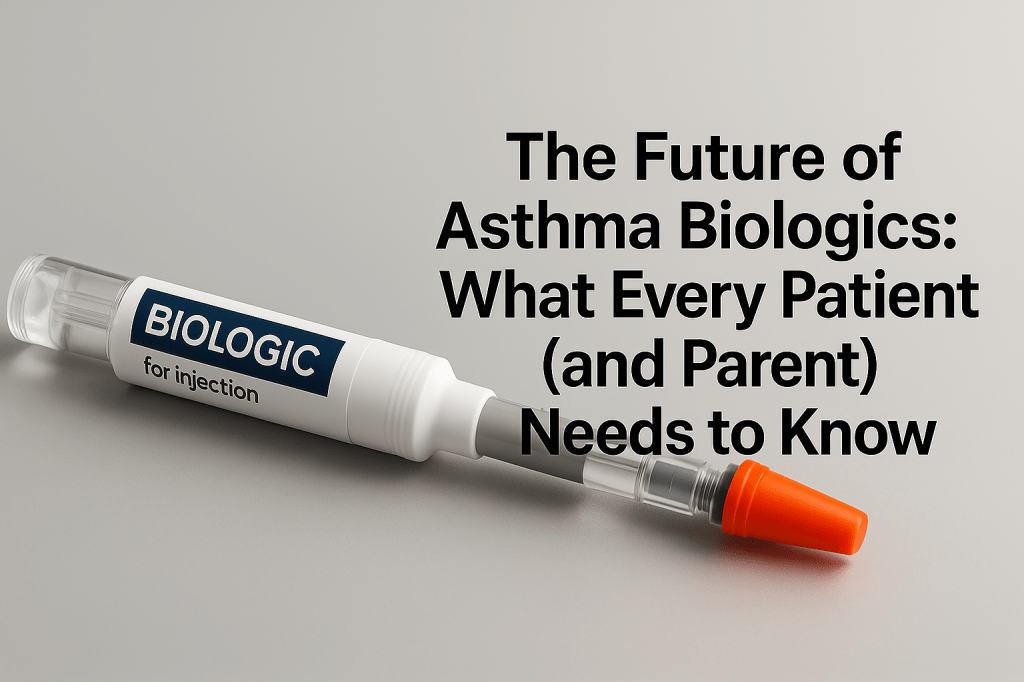
Most asthma patients know about inhalers.
Some know about steroids. Almost none walk into the office knowing about biologics. That’s changing fast.
Biologics are quickly reshaping asthma care by delivering better results with fewer medications and dramatically fewer ER visits. But they’re still misunderstood, underused, and surrounded by outdated thinking.
Here’s what you need to know about the future of asthma care and how biologics are changing everything.
What Even Is a Biologic?
Think of a biologic like a smart missile.
Instead of broadly reducing inflammation and wiping out your whole immune system (like steroids do), biologics target the specific molecules that cause asthma. These are lab-designed monoclonal antibodies that block the messengers that start the inflammation in your lungs.
Once the biologic locks onto its target (like IgE or TH2-related cytokines), your asthma symptoms fade. You may still react slightly to spring pollen or a cold, but you just get a mild cough instead of landing in the ER.
This is far better than nuking everything in your immune system with inhaled or oral corticosteroids, which can lead to serious side effects like bone loss, weight gain, cataracts, and more.
The Most Popular Biologics and What They Do
Here’s a cheat sheet of the most-used asthma biologics and their targets:
- Xolair: Blocks IgE. Approved for asthma, nasal polyps, and food allergy (even in kids as young as age 1 for food allergy).
- Dupixent: Blocks IL-4 and IL-13. Works on asthma, eczema, nasal polyps, EOE, and more.
- Fasenra: Blocks IL-5. Targets eosinophils that cause respiratory inflammation.
- Tezspire: Blocks TSLP (molecule in airways that drives the inflammation). Good for patients with “normal” labs but uncontrolled asthma.
- Adbry: Blocks IL-13. Especially helpful in atopic dermatitis with respiratory symptoms (and approved for Medicaid).
Each one covers different ground, so selection is based on your unique biology and symptoms.
Why Insurance Is Tricky (But Worth Fighting For)
While all of this sounds great, what’s preventing more patients from using biologics is price.
Biologics cost about $6,000 per injection. And as allergists, we have to fight insurance just to give us one biologic, much less two. This is thanks to corticosteroids being much cheaper, usually around $50.
The good news is that insurance often covers it if you (and your doctor) know how to work the system. Many approvals come through alternative diagnosis codes like eczema or food allergy, even if your goal is asthma control.
If you’re denied, ask your allergist to reapply using an approved secondary diagnosis. These biologics have FDA approval for multiple conditions, and this workaround often gets the green light.
The Hidden Bonus: Fewer Meds, Better Outcomes
Patients on biologics experience these extraordinary benefits:
- Less respiratory inflammation
- Use their rescue inhaler less
- Take fewer steroid bursts
- Miss fewer school or work days
- Sleep better (even during pollen season)
- Stronger lungs
- More activity
- And land in the ER way less
But the best part is that most biologics are given every 2–4 weeks. That’s it. No more daily meds, no more remembering multiple inhalers, no more chaos.
And while asthma remains incurable, biologics reduce the long-term severity, making life more enjoyable overall.
Common Myths and Misconceptions About Biologics
Fortunately, there are very few side effects.
Dupixent can cause mild conjunctivitis (red, irritated eyes with discharge) in about 7% of patients, especially those using it for eczema. If that happens, pausing the medication usually clears it up, and many patients can restart later without problems.
Some patients are also worried that these are too new, but biologics aren’t experimental anymore. They’re FDA-approved, heavily studied, and changing asthma treatment today.
And if you still have concerns, feel free to ask me in the comments.
Kids Can Get Biologics, Too
Parents often worry about injections, I get it.
But these shots can often be done at home, and specialty pharmacies provide support by sending nurses to teach you how to do it right until you get the hang of it.
As for when to get started, here are the FDA-recommended ages:
- Xolair: Approved for food allergy in kids as young as 1, asthma at age 6+
- Dupixent: Approved for eczema at 6 months, asthma at age 12+
- Fasenra & others: Typically approved for age 12+
If your child has both a food allergy and asthma, your allergist can apply for coverage under food allergy, even if the goal is better asthma control. That way, you hit both with one shot.
Where Asthma Treatment Is Headed
In the next ten years, asthma treatment will require less medication and have better clinical results.
Biologics alone will lead to more patients getting the medicine they need. We’ve been trying to beat a dead horse for decades, getting patients to take their controller medicine twice a day, and always bringing their inhaler. Too many patients just stop taking them as a result.
It’s too much, which is why the twice-a-month biologics will solve it. Asthma patients will not have to live their lives around an inhaler anymore.
The future of asthma care is already here, and it looks a lot like freedom.
What’s the #1 question you still have about biologics after reading this?

