
For decades, when someone developed anaphylaxis, we reached for an EpiPen.
That has finally changed.
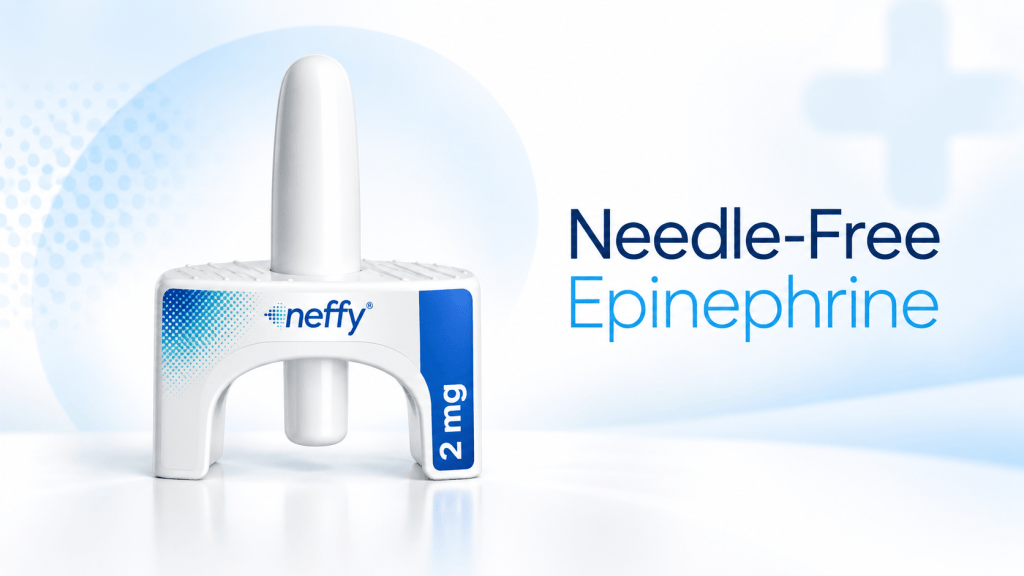
In 2024, the FDA approved neffy, the first epinephrine nasal spray for emergency treatment of serious allergic reactions, including anaphylaxis. Since then, its approval has expanded. Today, patients who weigh at least 33 pounds can receive epinephrine with a single spray into the nose.
But will this revolutionize how we treat anaphylaxis?
I believe it will.
After practicing allergy medicine for decades and using nefy in my clinic, here’s why it’s such a game-changer.
When it comes to anaphylaxis, epinephrine comes first
There is a line I used to repeat when teaching nurses how to treat anaphylaxis. There are three drugs for anaphylaxis: epinephrine, epinephrine, and epinephrine.
That was partly a joke, but the point was serious.
Antihistamines can help itching and hives. But they cannot reliably reverse the dangerous drop in blood pressure, airway swelling, and breathing problems that can occur during anaphylaxis. Steroids do not act fast enough to replace epinephrine either.
Epinephrine works within minutes on several parts of the reaction. It tightens dilated blood vessels, helping restore blood pressure, while also supporting the heart and opening the airways.
That is why timing matters so much.
If you think someone is developing anaphylaxis, you do not want to spend 10 minutes debating whether the reaction is “bad enough.” You want epinephrine given promptly.
But administering it via a needle is not so pleasant for most people…
The needle has always created a human problem
Epinephrine itself is not new.
Decades ago, physicians even used injectable epinephrine to treat asthma because we did not yet have the inhalers and medications available today. Eventually, emergency epinephrine moved from patients drawing medication into syringes themselves to automatic injectors such as the EpiPen.
That was a huge improvement.
But auto-injectors still require someone to use a needle during one of the most stressful moments imaginable. People can hesitate. They can hold the device backward, remove it too quickly, forget a step, or accidentally inject a finger.
I have seen enough allergic emergencies to know how different people behave when their heart is racing and somebody beside them cannot breathe. A device that seems simple during training can suddenly feel much more complicated.
That has always been part of the problem.
Neffy removes several of those steps
Using neffy is remarkably simple.
You place the device into one nostril and press the plunger. The device delivers a single dose of epinephrine through the nasal lining, where the medication is absorbed into the bloodstream.
There is no needle to position against the thigh, no injection to hold in place while counting.
But most importantly, there is no needle.
When neffy first appeared, I was skeptical. Epinephrine injections had been the standard for so long that replacing the needle during a life-threatening emergency sounded like a big leap.
Then I began seeing nasal epinephrine used clinically. What impressed me was how quickly patients responded and how easy the device was to administer. Patients also seemed far less reluctant to use it.
That last point is one of neffy’s greatest advantages.
A less frightening treatment may become an earlier treatment
Ask someone whether they would rather spray medicine into their nose or jab a needle into their thigh, and you can probably predict the answer.
When life-threatening anaphylaxis is involved, that preference is very important.
People delay epinephrine for all kinds of reasons. They wonder whether the reaction is severe enough. Children fear the needle. Adults may hesitate to inject themselves in a restaurant or airplane. A parent might stand there thinking, Do I really need to stick my child with this?
Every minute spent debating is another minute the allergic reaction can progress.
The FDA specifically identified fear of injections as one reason patients, particularly children, may delay or avoid epinephrine. The agency noted when approving neffy that a needle-free option could reduce that barrier.
That could become the real breakthrough.
Making epinephrine easier to give may help people actually give it when they should, especially at schools.
Schools may be where this makes the biggest difference
Schools are one of the places where I see tremendous potential.
A child can encounter peanut residue at lunch, trade snacks with another student, eat something from a vending machine, or react before a parent is anywhere nearby. That leaves a teacher, coach, secretary, counselor, or school nurse responding.
Most of those people are not allergy specialists.
I spent years talking to school groups about epinephrine, and many staff members initially had no idea how to use an injector correctly. That does not mean they were careless. Teachers already receive mountains of training on emergencies ranging from bleeding to severe weather.
Simpler equipment helps. A nasal spray reduces the number of decisions and physical steps required during an emergency.
Schools still need anaphylaxis training. They need clear protocols and rapid access to epinephrine. But the easier we make that first lifesaving action, the better.
One dose may not always be enough
Needle-free does not mean foolproof.
Just as with injectable epinephrine, a patient may need a second dose.
Current neffy instructions recommend having two nasal sprays immediately available. If symptoms do not improve or they worsen after the first dose, a second dose can be administered using a new device starting five minutes after the first.
People sometimes assume needing another dose means the first treatment “failed.” But anaphylaxis does not work that neatly. Severe reactions can require repeated epinephrine regardless of whether the medication entered through the thigh or nose.
Patients and caregivers should also know their emergency plan and understand when to seek emergency medical care. Certain structural nasal conditions can affect absorption, so patients with those conditions should discuss the appropriate epinephrine option with their physician.
But can you actually get neffy if you want to?
Access and cost could determine how much neffy changes care
There is still one major obstacle: getting the device into patients’ hands.
In my practice, patients overwhelmingly preferred nasal epinephrine when given the choice. But insurance coverage can change that choice quickly. If one prescription costs a patient hundreds of dollars while an injectable alternative costs a small copay, many families will take the injector. That is understandable, especially because most patients hope their epinephrine expires without ever being used.
This creates an unusual problem.
Epinephrine is medicine you purchase hoping you never need. When you do need it, however, you may need it within minutes. That makes affordability and availability part of the safety equation.
I would also like to see schools protected by clear laws and policies when trained staff administer epinephrine in good faith during a suspected emergency.
Fear of making the wrong call should never become another reason to wait.
The best epinephrine is the one people will actually use
Neffy does not cure food allergy, and it does not replace long-term treatments that may reduce the risk from accidental exposure.
Its job is much simpler.
When anaphylaxis happens, neffy gives patients another way to get epinephrine into the body quickly. And after decades of treating allergic disease, I keep coming back to the same problem: people tend to use too little epinephrine and use it too late.
A nasal spray will not eliminate every delay, of course. But taking the needle out of the equation removes a powerful psychological barrier for children, parents, teachers, and adults treating themselves.
That could mean less hesitation at the restaurant table, on the playground, or during a school lunch. And when someone is developing anaphylaxis, those saved minutes make a world of difference.
 TulsaAllergyNews